

Naga Sadhus at Nashik Kumbh 2027
- Home
- Naga Sadhus at Nashik Kumbh 2027
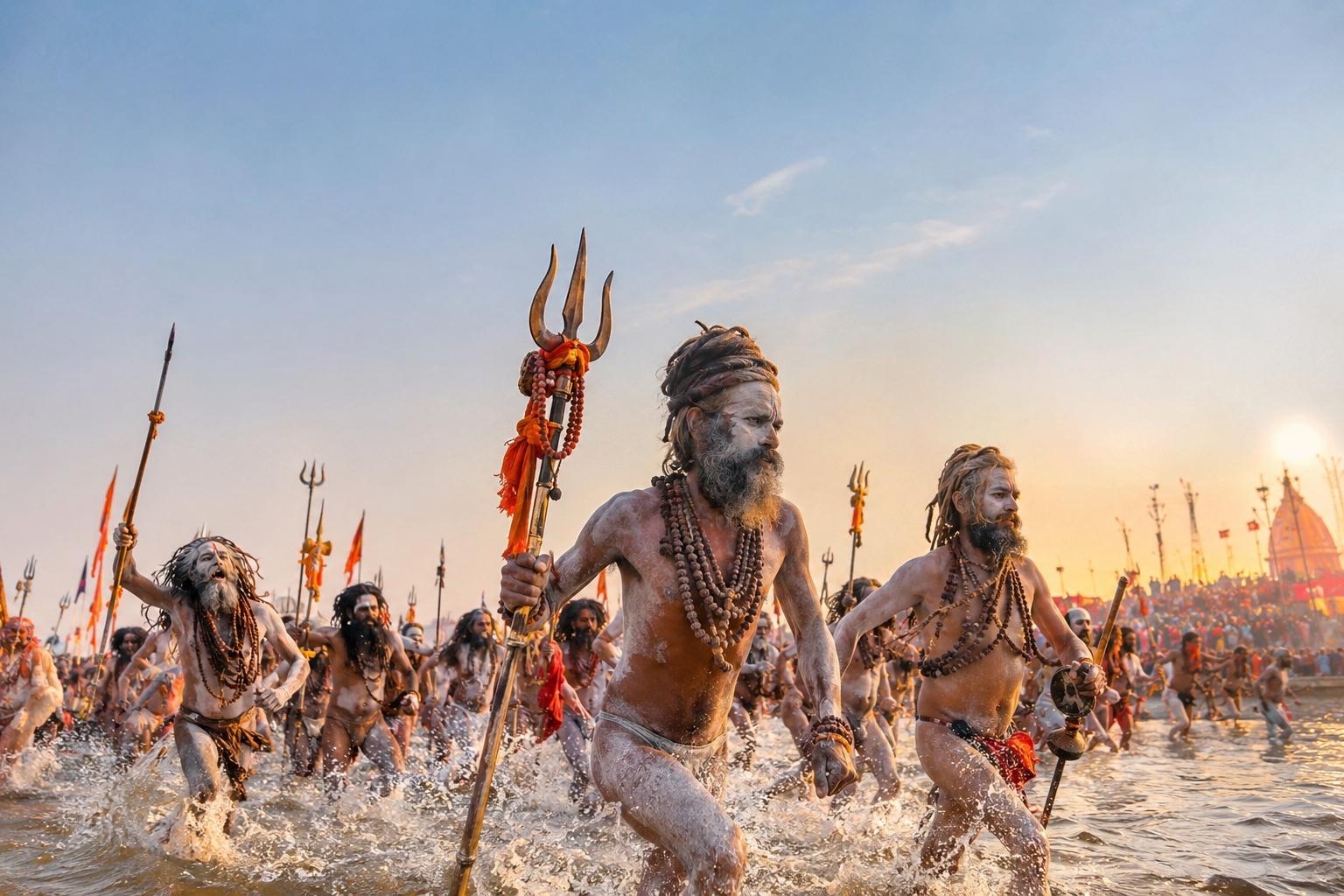

Naga Sadhus at Nashik Kumbh 2027
If there is one visual that defines the Nashik Kumbh Mela for the global audience, it is the charge of the Naga Sadhus. These ash-smeared, dreadlocked, and often naked ascetics are the undisputed stars of the Shahi Snan (royal bath). Their sudden, frenzied sprint into the Godavari River, wielding tridents and swords, is a spectacle of raw, untamed spirituality.
But who are these mysterious monks? Why do they cover themselves in ash? And most importantly, for the thousands of photographers and pilgrims attending the Nashik Kumbh Mela 2027, what are the strict rules for capturing their images?
This article unravels the history, rituals, and modern-day etiquettes surrounding the Naga Sadhus, ensuring you experience their presence with knowledge and respect.
The Fierce History of the Naga Sadhus
The Naga Sadhus are not just wandering hermits; they are a formidable, organized military order with a history steeped in warfare and theology.
Origins in the 8th Century
The Naga tradition was formally established by the great philosopher Adi Shankaracharya in the 8th century. He created the Dashanami Sampradaya (ten-name tradition) to unify the various ascetic groups across India. To protect the newly revived Sanatan Dharma from invading forces and ideological attacks, Shankaracharya initiated a warrior class of monks—the Nagas.
The “Digambara” Warrior Sect
The word “Naga” signifies a mountain or a serpent, symbolizing their untamed, primal energy. They belong to the Digambara sect, meaning “sky-clad” (naked).
- The Reason: Wearing clothes represents attachment to materialism. For the Naga, complete nudity symbolizes total detachment from society, ego, and worldly comfort.
- Military Might: Historically, they fought bravely in the armies of the Marathas and the Sikh Empire. Their primary weapons—the Trishul (trident) and the Khanda (sword)—represent the destruction of the three types of suffering (physical, spiritual, and mental).
Daily Rituals of the Naga Sadhus
While the world only sees them during the Kumbh charge, their daily life is a rigorous cycle of meditation, yoga, and ritual worship. Here are the core rituals they follow:
- The Bhasma Snan (Sacred Ash Bath)
The most iconic visual of a Naga Sadhu is his ash-covered body.
- The Ash (Bhasma): They use vibhuti made from cremation ground ashes mixed with ghee and sandalwood paste.
- The Meaning: Applying ash is a memento mori—a constant reminder that the body is temporary. It mimics Lord Shiva, who smears himself with ash, representing the destruction of the material world.
- The Dhumra-vati (Ritual Chillum)
Contrary to popular belief, the Naga Sadhus are not “drug addicts.” The smoking of the chillum (clay pipe) is a sacred ritual called Dhumra-vati.
- It is offered to Lord Shiva as prasad.
- The cannabis (bhang) is used not for intoxication, but as a tool to suppress hunger, endure extreme weather, and heighten focus during lengthy meditations.
- The Jata (Matted Locks)
A Naga Sadhu never cuts his hair. The long, matted dreadlocks (Jata) are allowed to grow wildly.
- The Symbolism: Just as the Ganges flows from Lord Shiva’s matted locks, the Jata of a Naga Sadhu is believed to channel cosmic energy. They often tie heavy weights or rudraksha beads into these locks.
- The Royal Dip (Kumbh Shahi Snan)
During the Nashik Kumbh 2027, their primary ritual is the Amrit Snan.
- They leave their camps (Akhadas) running in a single-file line or a chaotic human wave.
- They chant “Har Har Mahadev!” as they plunge into the Godavari. This is not just a bath; it is a re-enactment of the Devas reclaiming the nectar of immortality.
Photography Rules & Ethical Guidelines at Nashik Kumbh 2027
The Naga Sadhus are deeply revered. They are not tourist attractions; they are living gods in the eyes of devotees. When you attend the Nashik Kumbh Mela 2027, you must follow strict photography etiquettes to avoid disrespecting them and facing their wrath.
Rule 1: Always Ask for Permission
Never point a camera directly at a Naga Sadhu’s face without making eye contact and gesturing for consent.
- How to ask: Fold your hands (Namaste) and point to your camera. Nod respectfully.
- If they wave their hand or trishul in a “no” gesture, do not click. Many Nagas believe that a photograph steals a piece of their spiritual energy (prana).
Rule 2: Offer Dakshina (Token Donation)
In the Naga tradition, nothing is free. If a Naga Sadhu agrees to be photographed, it is customary and respectful to offer Dakshina (a small monetary token).
- Amount: Any amount between ₹10 to ₹100 is acceptable.
- The Process: Place the money at their feet or in the bowl they carry. Never hand it to them directly, as they do not touch material objects given in a transactional manner.
Rule 3: Absolutely No Flash Photography
The Naga Sadhus spend their lives in meditation (Tapasya) in caves and forests. A sudden camera flash is jarring and disrupts their meditative state.
- Tip: Use a high ISO setting or fast prime lens (f/2.8 or wider) to capture natural light instead of using flash.
Rule 4: Maintain Physical Distance
- Do Not Touch: Do not touch their Jata (matted hair), their trishul, or the ash on their bodies. Touching is considered a severe violation of their sacred space.
- Bathing Viewing: During the Shahi Snan, maintain a 10-15 feet distance. The administration will have barricades; do not cross them to “get a better shot.”
Rule 5: Respect Their Female Counterparts
Women are strictly prohibited from entering the inner camps of the male Naga Sadhus. Conversely, there are female Naga Sadhus (Aghori or Naga Maa). Never photograph them without explicit permission, as they are exceptionally reclusive and protective of their privacy.
The “Aghori” Connection – A Common Misconception
Many people confuse Naga Sadhus with Aghoris.
- Naga Sadhus are warriors focused on protecting dharma and following mainstream Shaiva or Vaishnava traditions.
- Aghoris are a fringe sect that practices extreme asceticism, often meditating on cremation grounds and consuming impure substances to break societal taboos.
While you might see Aghoris at the Kumbh, the majority of the charging warriors are Naga Sadhus. Do not confuse their rituals.
Frequently Asked Questions(FAQs)
Q1: Why do Naga Sadhus run into the river during the Kumbh?
They run to mimic the divine frenzy of the Devas (gods) who rushed to protect the Amrit pot during the Samudra Manthan. It is a display of spiritual power and total surrender to Lord Shiva.
Q2: Can women touch or meet Naga Sadhus?
Women can seek blessings and see them from a distance during the public processions. However, women are strictly restricted from entering the private encampments (Akhara grounds) where the Naga Sadhus reside.
Q3: Are the Naga Sadhus naked all the time?
They are "Digambara" (sky-clad) during rituals and meditations. However, during public processions in cities (like Nashik), they often wear a thin waistband or saffron cloth out of civic decency, but they are still considered "naked" in the spiritual sense.
Q4: Is smoking cannabis mandatory for Naga Sadhus?
It is a ritual offering, not a recreational activity. Many younger Nagas do not consume it, while older ones use it strictly as a medicinal herb to aid in fasting and cold resistance.
Q5: What is the best time to photograph Naga Sadhus in Nashik 2027?
The early morning (4:00 AM – 6:00 AM) during the Shahi Snan days offers the best natural light and the most dramatic action. Alternatively, visit their camps in the late afternoon when they are less busy.