


1 Days
---- Pax
Trimbakeshwar Jyotirlinga Pilgrimage Guide
Explore the sacred heritage of Trimbakeshwar with essential information about its religious importance, temple traditions, darshan timings, nearby attractions, and travel guidance for pilgrims visiting this revered Jyotirlinga.
About Trimbakeshwar Temple
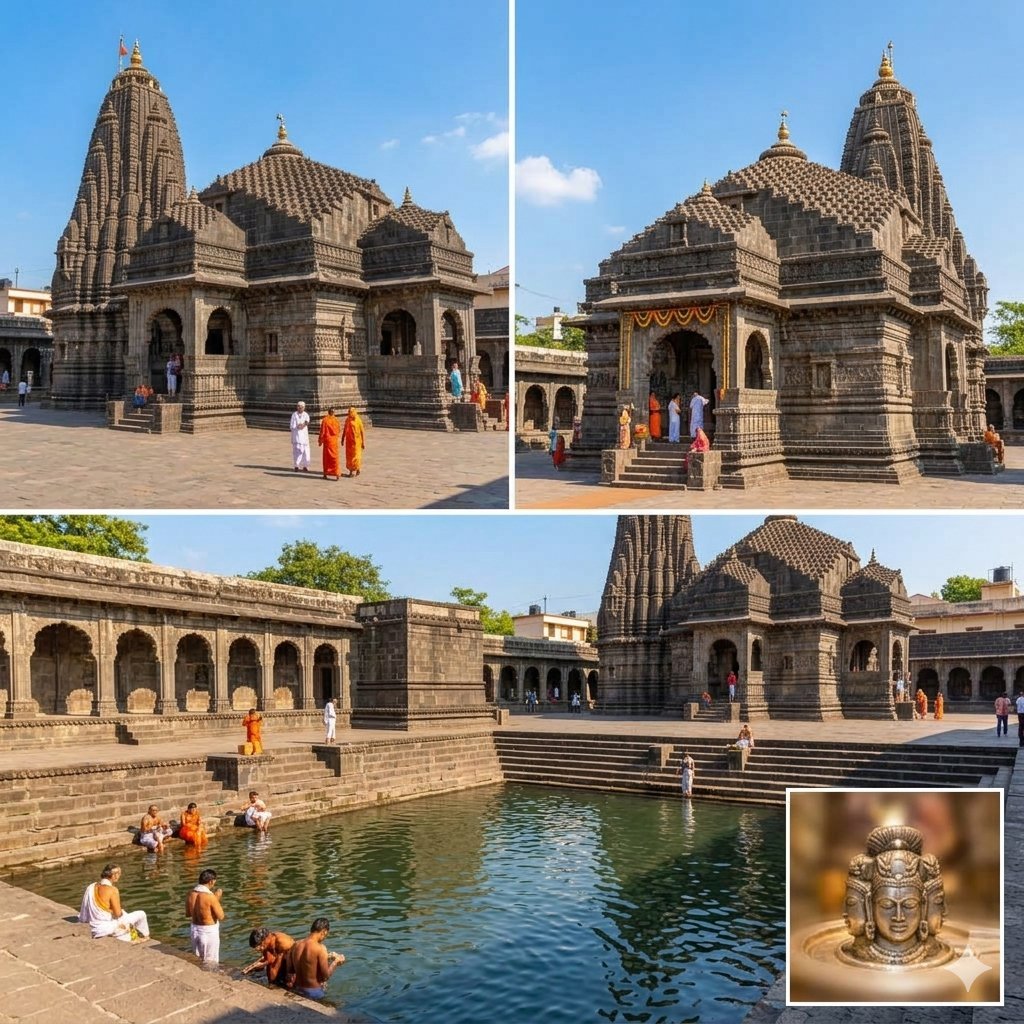
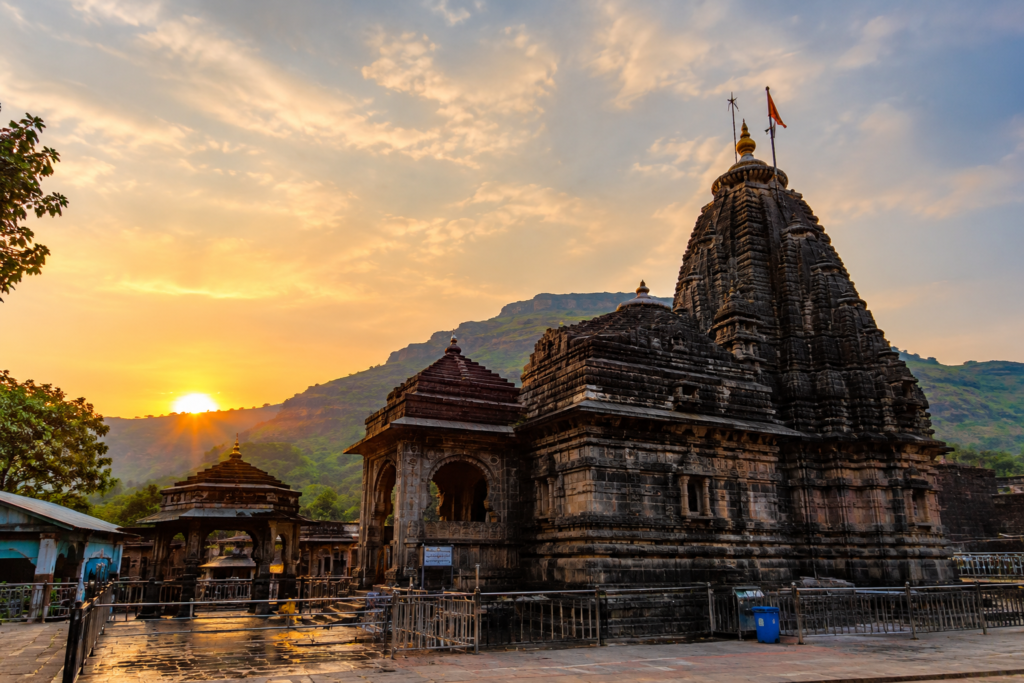
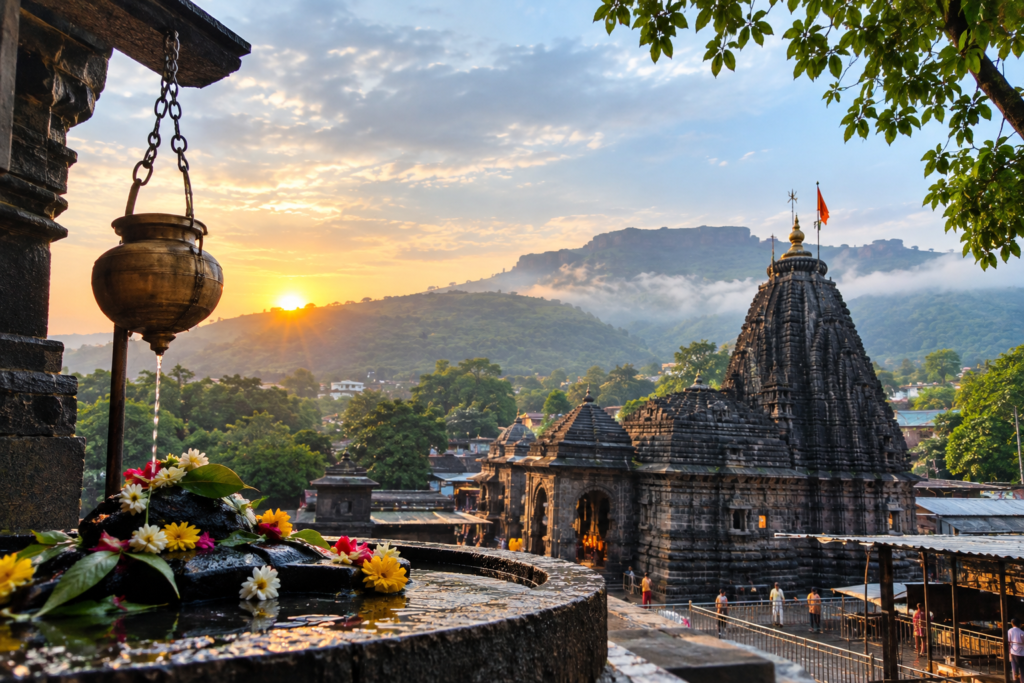
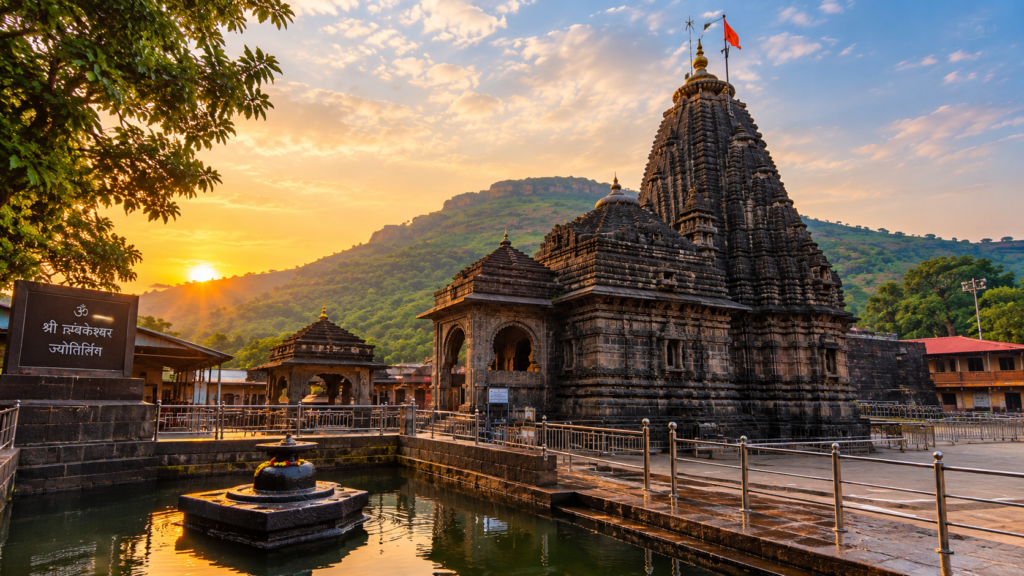
Trimbakeshwar (त्र्यंबकेश्वर) is a prominent pilgrimage town situated approximately 36 km from Nashik in Maharashtra. It is home to the renowned Trimbakeshwar Jyotirlinga Temple, one of the twelve sacred Jyotirlingas associated with Lord Shiva. The town also holds special importance as the spiritual source of the Godavari River.
Hindu traditions associate Trimbakeshwar with Sage Gautam Rishi, who is believed to have undertaken deep penance on Brahmagiri Hill. According to the legend, Lord Shiva appeared before him and brought the sacred waters of Ganga, Gautami, and Godavari to earth. The present temple is associated with the Peshwa period and is traditionally attributed to Mr. Odhekar, a knight in the service of the Peshwas.
🕉️ Spiritual Significance
The Trimbakeshwar Jyotirlinga holds a special position among the twelve Jyotirlingas. One of its distinctive features is the sacred lingam situated within the temple floor rather than being raised above it. The shrine is constructed from dark stone and reflects the distinctive architectural style of the Peshwa era.
Trimbakeshwar is regarded as a powerful spiritual destination where devotees seek divine blessings and liberation. Its religious importance is further enhanced by its connection with the origin of the Godavari, Brahmagiri Hill, Lord Ganesha traditions, and the Nath Sampradaya.
🕒Tour Itinerary
- Time
- Activity
- 5:30 AM – 12:00 PM
- Morning Darshan
- 4:00 PM – 9:00 PM
- Evening Darshan
- 7:00 AM & 7:00 PM
- Special Aarti
- All Days
- Temple remains open
Important Rituals
- Rudrabhishek: A traditional Shiva worship ritual involving sacred offerings such as water, milk, and bel leaves.
- Godavari Snan: Devotees take a holy bath in the sacred waters, particularly during significant pilgrimage occasions and Kumbh Mela.
- Pind Daan: An important ancestral ritual performed by pilgrims at the sacred Kushavarta Kund.
- Maha Shivaratri: A major religious celebration marked by special prayers, devotional ceremonies, and processions.
Nearby Attractions
- Brahmagiri Hill: A significant spiritual landmark associated with Sage Gautam and the origin traditions of the Godavari.
- Godavari River Origin: A revered location connected with the emergence and sacred source of the Godavari.
- Kushavarta Kund: A holy water tank where pilgrims perform religious and ancestral ceremonies.
- Anjaneri Hill: A well-known religious and natural attraction traditionally associated with the birthplace of Lord Hanuman.
- Nashik City: Visit important sites such as Ramkund, Sita Gufa, ancient temples, and other spiritual landmarks.
Travel Tips for Pilgrims
- Best Time to Visit: October to March generally offers pleasant weather, while the Kumbh Mela period attracts large numbers of pilgrims and has a highly spiritual atmosphere.
- Dress Code: Wear modest and comfortable clothing. Traditional Indian attire is recommended for temple visits.
- Photography: Photography restrictions apply inside the main sanctum; visitors should follow temple guidelines.
- Accommodation: Advance reservations are advisable during Kumbh Mela and other busy pilgrimage periods. Comfortable camp accommodation can be arranged near major pilgrimage locations.
- Transport: Trimbakeshwar can be reached from Nashik by buses, taxis, private cars, and other local transport options.
Trimbakeshwar & Kumbh Mela 2027
Trimbakeshwar will remain an important pilgrimage destination during the Nashik Kumbh Mela 2027. Devotees are expected to visit the Jyotirlinga, participate in religious rituals, and take sacred baths in the Godavari during this major spiritual gathering. Pilgrims can choose convenient camp accommodation with facilities such as comfortable stays, Satvik meals, transportation assistance, and round-the-clock support.
Key Bathing Dates (Amrit Snan): 2 August 2027 (Somvati Amavasya), 17 August 2027 (Raksha Bandhan), along with other significant bathing occasions during the Kumbh Mela period.