

Bathing Dates Kumbh Mela 2027
Ajanta Caves – Discovered in 1819
Historical Significance & Excavation Periods
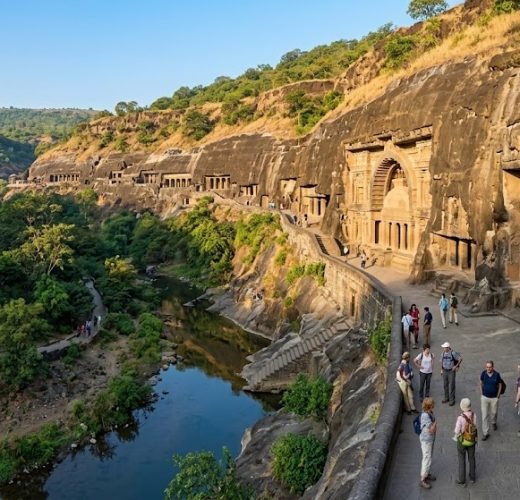
Ajanta Caves – Complete Visitor Guide
The Ajanta Caves, located 107 kilometers north of Aurangabad in Maharashtra, stand as one of India’s most remarkable archaeological treasures. Designated as a UNESCO World Heritage Site, Ajanta is globally renowned for its extraordinary Buddhist rock-cut cave temples and monasteries adorned with exquisite wall paintings that represent some of the finest surviving examples of ancient Indian art. The caves are excavated into a dramatic horse-shoe shaped bend of rock surface, rising nearly 76 meters in height and overlooking a narrow stream below. This secluded valley provided a calm and serene environment for Buddhist monks who retreated to these peaceful dwellings during the rainy seasons, using this time for meditation, intellectual discourses, and furthering their religious pursuits.
Historical Discovery
The fascinating story of Ajanta’s rediscovery adds to its mystique. In 1819, an Army Officer from the Madras Regiment of the British Army stumbled upon these ancient caves during one of his hunting expeditions. The discovery instantly became famous, catapulting Ajanta to the status of a globally important tourist destination. Since then, the site has continued to captivate historians, archaeologists, artists, and travelers from around the world.
History & Excavation Periods
The caves were excavated over several centuries, spanning approximately from the 2nd century BC to the 6th century AD. Each cave was carved according to the needs of different periods, resulting in a fascinating evolution of architectural and artistic styles. The site comprises a total of 29 caves, including both Chaityas (prayer halls) and Viharas (monasteries). Each cave was originally connected to the stream below by a flight of steps, which are now almost entirely obliterated, although traces of some can still be noticed at certain places.
Buddhist Art & Architecture
Ajanta is particularly celebrated for its magnificent wall paintings and sculptures that depict scenes from the life of Buddha, Jataka tales (stories of Buddha’s previous lives), and various Buddhist deities and motifs. These paintings are considered masterpieces of Buddhist religious art, showcasing remarkable technical skill, vibrant colors, and intricate detailing that have survived for over two millennia. The caves also feature stunning rock-cut sculptures, pillars with ornate carvings, and beautifully designed facades that reflect the evolution of Buddhist architecture over centuries.
Visitor Information & Travel Guide
Location & How to Reach
Distance: 107 km north of Aurangabad, Maharashtra.
Nearest Airport: Aurangabad Airport (approximately 100 km away).
Nearest Railway Station: Aurangabad Railway Station, well-connected to major cities.
By Road: Regular buses and taxis are available from Aurangabad and nearby cities.
Best Time to Visit
October to March: Pleasant weather with cooler temperatures, ideal for exploring the caves.
Monsoon (July-September): The surrounding landscape becomes lush green, enhancing the scenic beauty.
Avoid Summer (April-June): Temperatures can be extremely high, making exploration uncomfortable.
Timings & Entry
Opening Hours: 9:00 AM to 5:30 PM (closed on Mondays).
Entry Fee: Nominal charges for Indian and foreign tourists (check current rates).
Photography: Allowed in designated areas without flash; special permission required for professional photography.
Important Tips for Visitors
Wear comfortable walking shoes as exploring the caves involves climbing stairs and walking on uneven terrain.
Carry sufficient water and light snacks as facilities inside are limited.
Hire a local guide or audio guide to fully appreciate the historical and artistic significance of each cave.
Start early in the morning to avoid crowds and enjoy better lighting for photography.
Respect the heritage site by not touching or damaging the ancient paintings and sculptures.
Nearby Attractions
Ellora Caves: Another UNESCO World Heritage Site, located approximately 100 km from Ajanta, featuring Hindu, Buddhist, and Jain rock-cut temples.
Daulatabad Fort: A historic hill fort near Aurangabad with impressive defensive architecture.
Bibi Ka Maqbara: Often called the “Taj of the Deccan,” a beautiful mausoleum in Aurangabad.
Grishneshwar Temple: One of the 12 Jyotirlingas dedicated to Lord Shiva, located near Ellora.
Key Highlights at a Glance:
Location: 107 km north of Aurangabad, Maharashtra.
UNESCO Status: World Heritage Site.
Period: 2nd century BC to 6th century AD.
Total Caves: 29 rock-cut caves.
Types of Caves: Chaityas (prayer halls) and Viharas (monasteries).
Key Features: Extraordinary wall paintings, intricate sculptures, Buddhist art.
Discovery: 1819 by a British Army Officer.
Setting: Horse-shoe shaped bend, 76 m height, overlooking a stream.
Purpose: Rainy season retreat for Buddhist monks.
Best Time to Visit: October to March.
Closed On: Mondays.