

Godavari Ghat Nashik
- Home
- Godavari Ghat Nashik

Godavari Ghat Nashik
Godavari Ghat Nashik: The Sacred Riverfront Where Divinity Meets Daily Life (Complete Guide)
To visit Nashik and not walk along the Godavari Ghat is to miss the very soul of this ancient city. While the world knows Nashik for its vineyards and its booming industrial presence, the true identity of this city is etched into the ancient, weathered stone steps that descend into the emerald-green waters of the Godavari River.
The Godavari Ghat is not a single, isolated point of worship. It is an expansive, living, breathing riverfront ecosystem that stretches for several kilometres along the eastern edge of the city. It is the grand stage upon which the drama of human life unfolds daily—from the first rays of dawn touching the water to the flickering flames of the evening aarti.
If the Trimbakeshwar Temple represents the cosmic, hidden source of the river, and Ramkund represents the specific, mythological touchpoint of Lord Rama, then the broader Godavari Ghat is the beating heart of the city—the place where mythology, spirituality, and the gritty reality of everyday life flow together into a single, magnificent current.
This comprehensive guide will take you on a virtual journey along every stone, every ghat, and every ritual of this sacred riverfront. Whether you are planning a pilgrimage for the Nashik Kumbh Mela 2027 or simply seeking a quiet moment of introspection, understanding the grandeur of the Godavari Ghat is essential.
The Spiritual Geography: More Than Just a Riverbank
When locals refer to the “Godavari Ghat,” they are referring to the entire continuous stretch of stepped embankments that line the river as it meanders through the Panchavati area. This is not a natural bank; it is a meticulously engineered marvel built over centuries by various dynasties, most notably the Peshwas and the Holkars, who transformed a muddy riverbank into a majestic stone amphitheatre of faith.
The ghat is broadly divided into several distinct sections, each with its own name, historical significance, and specific ritualistic purpose.
The Major Ghats Along the Stretch:
- Ramkund: As covered extensively in our previous guide, this is the crown jewel. It is the primary, most sacred tank where Lord Rama bathed and where Asthi Visarjan is performed.
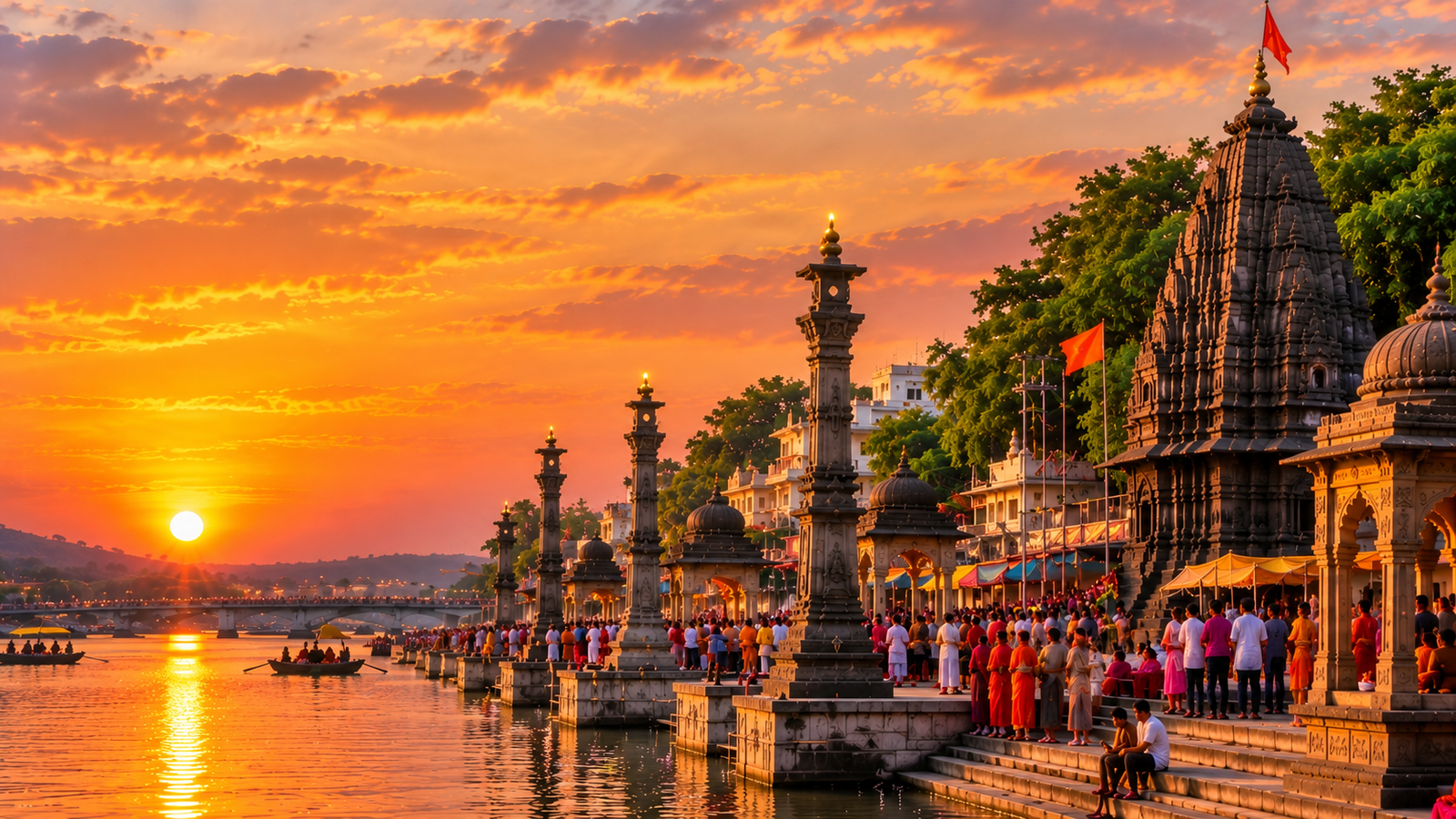
- Ahilyabai Holkar Ghat: Named after the legendary Queen of Malwa, this is the widest, most grandiose, and most photographed section of the Godavari Ghat. It is characterised by its massive, sweeping stone steps and towering deep-stone lamps (Deepstambhas).
- Kapileshwar Ghat: Located adjacent to the Kapileshwar Temple, this ghat is associated with Lord Brahma and is frequented by devotees performing specific rituals for planetary peace.
- Muktidham Ghat: A more modern addition, built specifically to accommodate the massive crowds during the Kumbh Mela, ensuring that the pressure on the ancient Ramkund steps is reduced.
Walking from one end of the Godavari Ghat to the other is a journey through time. You will see ancient, moss-covered stones that have supported the weight of millions of devotees over centuries, standing right next to freshly renovated platforms built by the Nashik Municipal Corporation.
The Architectural Grandeur of the Ghats
The architecture of the Godavari Ghat is a testament to the engineering genius of 18th-century India. The Peshwa rulers, who were devout followers of Lord Shiva and Rama, poured immense wealth into solidifying the riverbanks.
Key Architectural Features:
- The Step-Well Design: Unlike a simple sloping bank, the ghats feature a series of descending stone platforms. As the water level of the Godavari fluctuates drastically between the dry summer months and the torrential monsoon, these multi-tiered steps ensure that devotees always have access to the water, regardless of the season.
- The Deepstambhas (Lamp Pillars): Standing tall at the Ahilyabai Ghat are massive, intricately carved stone pillars. On special occasions, these pillars are lit with ghee lamps, creating a spectacular visual of towering flames that reflect off the dark river water.
- Chhatris (Pavilions): Scattered along the ghats are small, domed pavilions supported by carved pillars. These Chhatris serve as resting spots for pilgrims, meditation spaces for sadhus, and vantage points to observe the river.
- The Submerged Temples: During the dry season, you can spot small, ancient shrines dedicated to various deities that are partially submerged in the water. When the river swells during the monsoons, these temples disappear entirely, only to re-emerge months later, symbolizing the eternal cycle of creation and destruction.
The Daily Rhythm of Life at Godavari Ghat
The beauty of the Godavari Ghat lies in its transformation from a serene, meditative space in the morning to a vibrant, chaotic social hub in the evening. The ghats are never truly empty; they are the city’s lungs.
The Dawn Rituals (4:00 AM – 8:00 AM):
As the first rays of the sun break over the Brahmagiri hills, the ghats come alive with the soft murmur of Vedic chants. This is the most sacred time to be at the river.
Hundreds of devotees, mostly elderly men and women, descend the steps to perform Tarpan—the ritual of offering water to the sun god and their ancestors. You will see men standing waist-deep in the river, facing the rising sun, filtering water through their fingers in a precise, rhythmic motion. The air is thick with the smell of wet earth, sandalwood paste, and burning camphor. Professional priests (Pandas) set up their small wooden platforms on the steps, ready to assist families with complex ancestral rites.
The Daytime Hustle (9:00 AM – 4:00 PM):
As the sun climbs higher, the spiritual intensity mellows out, and the ghats take on a more tourist-friendly, social vibe.
This is the time when local vendors set up shop. You will find:
- Flower sellers offering garlands of marigolds and roses for offerings.
- Puja kit vendors selling coconuts, betel nuts, and incense sticks.
- Local snack stalls (tapris) serving hot ‘Misal Pav’ and cutting chai to hungry pilgrims.
It is also a popular spot for street photographers and history buffs who come to capture the majestic architecture of the Ahilyabai Ghat.
The Twilight Spectacle (5:30 PM – 8:00 PM):
As dusk settles, the Godavari Ghat prepares for its grand finale—the Godavari Aarti. While the main ceremony is held at Ramkund, the energy spills over to the adjoining ghats. Thousands of diyas (earthen lamps) are lit and floated on the river. The sound of conch shells, cymbals, and the synchronized chanting of priests echoes across the water. It is a sensory overload of fire, sound, and devotion that rivals the famous Ganga Aarti of Varanasi.
The Mighty Ahilyabai Holkar Ghat
No discussion about the Godavari Ghat is complete without dedicating a significant section to the Ahilyabai Holkar Ghat. Located just a short walk from Ramkund, this is the widest and most imposing structure on the riverfront.
Named after the revered Queen Ahilyabai Holkar (1725–1795) of the Maratha Malwa kingdom, this ghat was rebuilt and expanded under her patronage. She was known for her extensive temple and ghat construction across India, and her work in Nashik is among her finest.
Why is this specific ghat so special?
- The Giant Lamps: The deepstambhas here are massive. During the Kumbh Mela, they are lit with hundreds of ghee-soaked wicks, creating a towering inferno that acts as a lighthouse for the millions of pilgrims gathered along the banks.
- The Changing Water Levels: This ghat is the best place to observe the dramatic change in the Godavari’s volume. In the summer, you can walk down to the very bottom, where the water recedes to a narrow stream. In the monsoon, the water climbs perilously close to the top steps, submerging the lower platforms entirely.
- The Iconic Photo Point: For travelers, this is the Instagram-famous spot of Nashik. The wide, symmetrical steps, the contrast of the black stone against the grey water, and the backdrop of the modern city skyline create a stunning visual juxtaposition.
The Deep Connection: Godavari Ghat and the Nashik Kumbh Mela 2027
The Godavari Ghat is not just a place of daily worship; it is the designated battleground for one of the largest peaceful gatherings on the planet—the Nashik Kumbh Mela 2027.
When the Kumbh Mela arrives, the entire riverfront, stretching from the Muktidham Ghat in the north to the Ahilyabai Ghat in the south, is transformed into a temporary mega-city.
What happens to the ghats during the Kumbh?
- The Floating Bridges: To manage the millions of pilgrims who need to cross from one side of the city to the other, massive pontoon bridges (temporary floating bridges) are constructed over the river, linking the ghats directly.
- The Shahi Snan Stage: The main ghats, especially Ramkund and Ahilyabai Ghat, are reserved for the royal processions of the Akharas (Naga Sadhus). The steps become a vast grandstand from where the common public watches the naked ascetics run into the water for the Amrit Snan.
- Temporary Infrastructure: During the 55-day festival, the ghats are equipped with thousands of temporary changing rooms, drinking water kiosks, and medical aid posts. The normally serene steps turn into a logistical nightmare, yet they manage to hold the weight of hundreds of thousands of bodies at once.
If you are visiting for the 2027 Kumbh, it is crucial to understand the geography of the ghats. Knowing that Ahilyabai Ghat is wider and slightly less claustrophobic than Ramkund can help you choose a safer spot for your ritual bath.
The Environmental Challenge: Protecting the Godavari Ghat
With great faith comes great responsibility—and a great environmental toll. The Godavari Ghat faces a severe ecological crisis. The heavy influx of pilgrims, the immersion of idols, and the offering of flowers, plastics, and chemical-laden puja material have significantly polluted the river.
What is being done?
- The Godavari Conservation Project: The Maharashtra government, along with the Nashik Municipal Corporation, has launched massive projects to build sewage treatment plants (STPs) to ensure that untreated waste does not flow directly into the ghats.
- Nirmal Ghat Initiative: The local administration, with help from NGOs, has placed large bins on the ghats to collect flowers and organic waste, which is later converted into compost.
- Plastic Ban: Use of single-use plastic is strictly prohibited on the ghats during major festivals, though enforcement remains a challenge.
As a responsible pilgrim, you can contribute by refraining from throwing plastic bags or bottles into the river and ensuring that only biodegradable materials are used for your offerings.
Complete Visitor’s Guide to the Godavari Ghat
To help you plan your pilgrimage or sightseeing trip, here is a practical, no-nonsense guide to visiting the ghats.
Best Time to Visit:
- For Photography & Sightseeing: Early morning (6:00 AM – 8:00 AM) for golden sunlight and serene waters. Evening (5:30 PM – 7:30 PM) for the vibrant Aarti.
- For Spiritual Bathing: Take a dip during the sunrise hours when the water is considered most pure and the crowd is manageable.
- Seasonal: October to March (Winter) is the most comfortable weather. Avoid the scorching summer months (April-June) as the stone steps get unbearably hot.
Essential Tips:
- Footwear: You must remove your footwear before stepping onto the holy platforms near the water’s edge. It is advisable to carry a small bag to keep your shoes in, or leave them with the designated shoe-keepers (who charge a nominal fee).
- Clothing: Modest, traditional attire is best. Light cotton sarees, salwar kameez, dhotis, or trousers are appropriate. Avoid revealing clothes as a sign of respect.
- Safety: The steps can be extremely slippery due to moss and wet patches. Walk slowly and avoid rushing to the water. If you cannot swim, avoid going beyond waist-deep.
- Touts: You will be approached by many self-proclaimed priests (Pandas) offering to conduct pujas. It is advisable to approach only those who have an official ID issued by the Nashik Temple Trust to avoid being overcharged.
The Philosophical Essence of the Ghats
Ultimately, the Godavari Ghat is a mirror to the human soul. Standing on those ancient steps, watching the eternal flow of the river, you witness the circle of life in its most raw form.
On one side, you see the joy of a newly married couple dipping their feet in the water, praying for a blessed future. A few steps away, you see a family performing the final rites for their elderly father, releasing his ashes into the current. Teenagers splash around in the shallow waters, laughing and carefree, while an elderly monk sits in absolute silence, meditating with his eyes closed.
The Godavari Ghat teaches you one profound lesson: Life flows on, regardless of our joys and our sorrows. The water does not stop for anyone. It simply accepts whatever you offer it—flowers, prayers, ashes, or tears—and carries it away towards the ocean.
Visiting this riverfront is not just a religious duty; it is a lesson in humility, surrender, and the relentless passage of time.
Frequently Asked Questions (FAQs)
Q: Where is the Godavari Ghat located in Nashik?
A: The Godavari Ghat is located in the Panchavati area of Nashik, Maharashtra, running along the eastern bank of the Godavari River. It is easily accessible from the Nashik Road Railway Station, which is about 8 kilometers away.
Q: What is the difference between Ramkund and Godavari Ghat?
A: Ramkund is a specific, highly sacred water tank (kund) located within the larger Godavari Ghat complex. The Godavari Ghat refers to the entire stretch of riverfront steps, which includes Ramkund, Ahilyabai Ghat, Kapileshwar Ghat, and several other bathing platforms.
Q: What time is the Godavari Aarti performed at the Ghats?
A: The grand Godavari Aarti is performed daily at sunset, typically between 6:30 PM and 7:30 PM, depending on the season. The main ceremony is held at Ramkund, but the energy permeates the entire ghat stretch.
Q: Is it safe to bathe in the Godavari at Nashik?
A: Yes, bathing is considered highly auspicious, and millions do so daily. However, the water quality can vary. It is recommended to bathe during the early morning hours and avoid ingesting the water. Non-swimmers should strictly stay on the steps.
Q: How is the Godavari Ghat connected to the Kumbh Mela?
A: The Godavari Ghat, particularly the Ramkund and Ahilyabai Ghat sections, is the epicenter of the Nashik Kumbh Mela. The Shahi Snan (Royal Bath) processions take place here, and temporary infrastructure is built along the ghats to accommodate the millions of visitors.
Q: Are there changing rooms available for ladies at the ghats?
A: Yes, the Nashik Municipal Corporation has built basic changing rooms and washrooms along the main ghats, especially near Ahilyabai Ghat and Muktidham Ghat, for the convenience of women pilgrims.