


Kumbh Mela Shahi Snan in Nashik 2027: A Complete Guide
- Home
- Kumbh Mela Shahi Snan in Nashik 2027: A Complete Guide

Kumbh Mela Shahi Snan in Nashik 2027: A Complete Guide
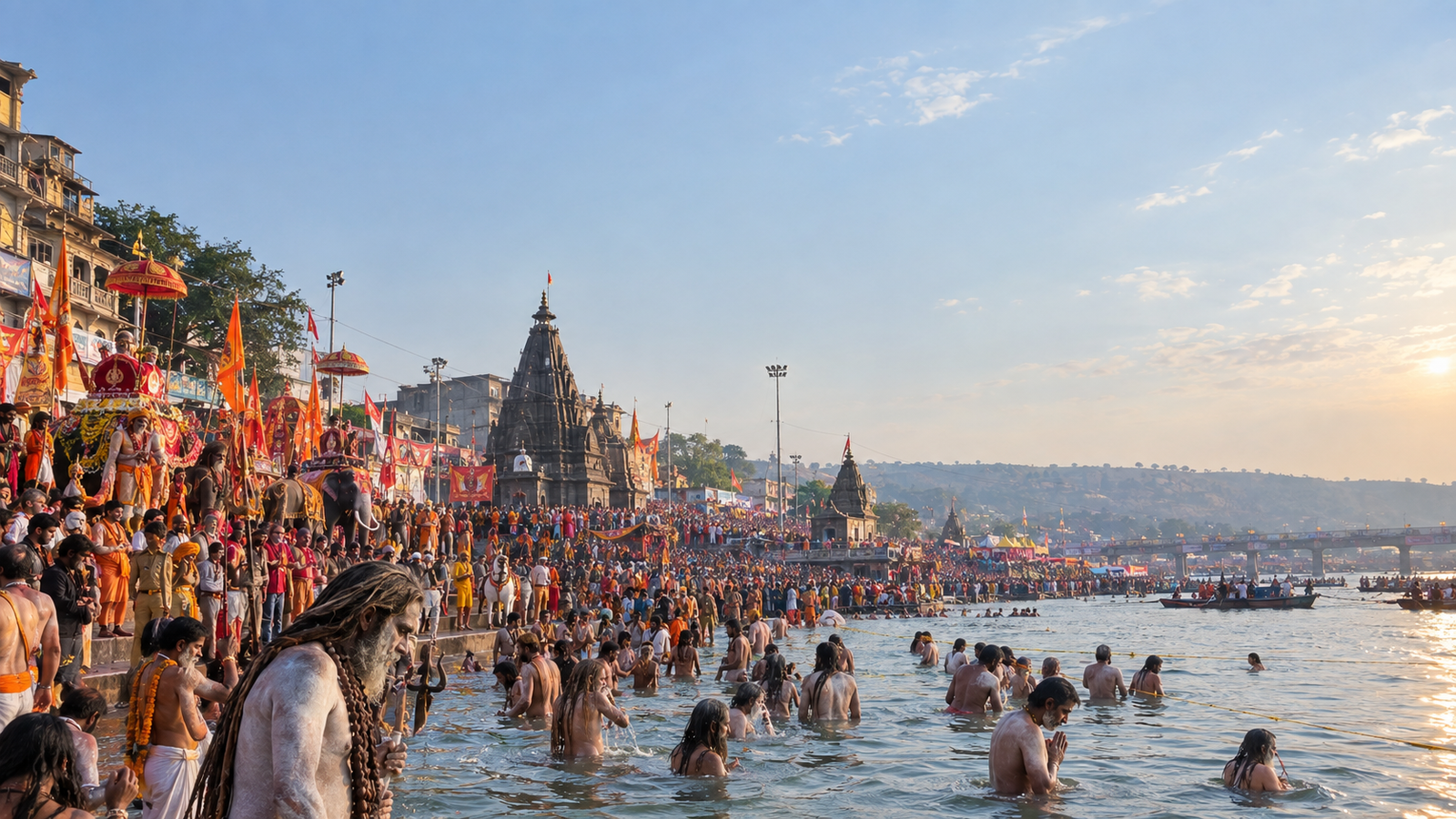
The Shahi Snan (royal bath) is the most sacred ritual of the Kumbh Mela. In Nashik 2027, it will be held at Ramkund on the Godavari River in Nashik and Kushavarta in Trimbakeshwar. The exact dates will be announced by the Maharashtra government based on Vedic astrology. It occurs when Jupiter enters Leo (Simha) and the Sun enters Leo. The Shahi Snan is performed by Akharas and Naga Sadhus. It is the central event of the Nashik Kumbh Mela.
The Nashik Kumbh Mela 2027 is one of the most anticipated religious events in India. Among all its rituals, the Shahi Snan holds the highest spiritual and cultural significance. Shahi Snan literally means “royal bath.” It is a ceremonial bathing ritual performed by the heads of monastic orders and thousands of sadhus. For pilgrims, witnessing the Shahi Snan is considered extremely auspicious. This article provides a detailed, informative guide to the Shahi Snan in Nashik Kumbh Mela 2027. It covers its meaning, significance, timing, locations, participants, rituals, history, and practical tips for visitors.
Shahi Snan: The Royal Bath of Kumbh Mela
The Shahi Snan is the royal bath of the sadhus during the Kumbh Mela. The word “Shahi” means royal, and “Snan” means bath. It is not an ordinary dip in the river. It is a highly organized, traditional, and ritualistic event. The Shahi Snan is performed by the Akharas, which are monastic orders of sadhus. These Akharas have a fixed hierarchy and order of bathing. The most senior Akharas bathe first, followed by others. The Shahi Snan is considered the most important day of the Kumbh Mela. It is believed that taking a holy dip on this day cleanses all sins and grants spiritual liberation (moksha).
Importance of Shahi Snan in Nashik Kumbh Mela
The Nashik Kumbh Mela is unique because it is held in two locations: Nashik and Trimbakeshwar. The Shahi Snan is also held at both places. In Nashik, the main bathing ghat is Ramkund on the Godavari River. In Trimbakeshwar, the holy tank is Kushavarta. Both are considered equally sacred. The Shahi Snan in Nashik is especially significant because the Godavari River is believed to be a form of the Ganga. According to legend, the sage Gautama Rishi brought the Godavari to this region. Taking a dip in the Godavari during the Shahi Snan is believed to wash away sins and bestow blessings.
Shahi Snan Dates for Nashik Kumbh Mela 2027
The exact dates of the Shahi Snan in Nashik 2027 will be announced by the Maharashtra government and the Kumbh Mela authorities. However, the timing is determined by Vedic astrology. The Nashik Kumbh Mela is held when Jupiter enters Leo (Simha) and the Sun enters Leo. This alignment occurs roughly every 12 years. The last Nashik Kumbh Mela was held in 2015. The next one is expected in 2027.
Within the Kumbh Mela period, there are usually three Shahi Snans. These are held on specific dates that are considered most auspicious. The dates are calculated based on the positions of the planets and the Hindu calendar. Typically, the Shahi Snan dates fall between July and September. However, the exact schedule for 2027 will be confirmed closer to the event. Pilgrims and tourists are advised to check official announcements from the Maharashtra Tourism Development Corporation (MTDC) or the Nashik Kumbh Mela Authority.
Locations of Shahi Snan: Ramkund and Kushavarta
The Shahi Snan in Nashik 2027 will be held at two main locations:
Ramkund, Nashik
Ramkund is a sacred bathing ghat on the banks of the Godavari River in Nashik. It is believed that Lord Rama bathed here during his exile. The name “Ramkund” means “the tank of Rama.” The ghat has historic stone steps, temples, and monasteries. During the Shahi Snan, thousands of sadhus and pilgrims gather at Ramkund. The Akharas march in a grand procession to the ghat. The atmosphere is filled with chanting, music, and spiritual energy.
Kushavarta, Trimbakeshwar
Kushavarta is a holy tank in Trimbakeshwar, about 30 kilometers from Nashik. It is believed to be the source of the Godavari River. According to legend, Gautama Rishi created this tank to bring the Godavari to Earth. The Shahi Snan at Kushavarta is equally important. The Trimbakeshwar Temple, one of the twelve Jyotirlingas of Lord Shiva, is located nearby. Pilgrims take a holy dip in Kushavarta during the Shahi Snan.
Participants in Shahi Snan: Akharas and Naga Sadhus
The Shahi Snan is led by the Akharas. The Akharas are monastic orders of sadhus that have existed for centuries. They are divided into different sects, such as:
Naga Sadhus: Known for their ash-covered bodies, long matted hair, and intense austerities. They are often the first to bathe.
Vaishnava Akharas: Followers of Lord Vishnu.
Shaiva Akharas: Followers of Lord Shiva.
Udasin Akharas: Followers of Guru Nanak and other saints.
The Mahants (heads of the Akharas) lead the procession. The sadhus carry flags, banners, and traditional weapons. They chant mantras and sing devotional songs. The Shahi Snan is also attended by millions of pilgrims, tourists, and photographers from around the world.
Procession and Rituals of Shahi Snan
The Shahi Snan begins with a grand procession. The sadhus of each Akhara march from their camps to the bathing ghat. The procession is a spectacular sight. Naga Sadhus, covered in ash, lead the way. They are followed by other sadhus, elephants, horses, and palanquins. The air is filled with the sound of conch shells, drums, and chanting.
At the ghat, the sadhus take a holy dip in the river. The order of bathing is strictly fixed. The most senior Akharas bathe first. This is a matter of great prestige and tradition. After the sadhus, common pilgrims are allowed to bathe. The entire event is supervised by the Kumbh Mela authorities to ensure safety and order.
Historical Background of Shahi Snan in Nashik
The tradition of Shahi Snan in Nashik goes back centuries. The Chinese traveler Hiuen Tsang visited India in the 7th century and wrote about a great gathering at Nashik. The Maratha ruler Ahilyabai Holkar built many ghats and temples in Nashik and Trimbakeshwar. She played a key role in developing the infrastructure for the Kumbh Mela. The Peshwas also patronized the festival. In modern times, the Shahi Snan has become a major event that attracts global attention. The 2015 Shahi Snan in Nashik was attended by millions of people and was covered extensively by the media.
Witnessing the Shahi Snan in Nashik 2027: Practical Tips
If you plan to witness the Shahi Snan in Nashik 2027, here are some practical tips:
Plan early: Accommodation in Nashik and Trimbakeshwar fills up months in advance. Book your stay as early as possible.
Use public transport: Trains and buses are the best way to reach Nashik. Avoid driving your own vehicle due to heavy traffic and parking restrictions.
Arrive early: The Shahi Snan attracts huge crowds. Arrive at the ghat early to get a good spot.
Follow safety rules: Follow the instructions of police and volunteers. Do not enter restricted areas.
Respect traditions: The Shahi Snan is a religious event. Dress modestly and behave respectfully.
Stay hydrated: The festival is usually held in summer. Carry water bottles and drink plenty of fluids.
Keep valuables safe: The crowd is massive. Keep your money and documents secure.
Photography: Photography is allowed in some areas but restricted in others. Check local rules before taking pictures.
Economic and Cultural Impact of Shahi Snan
The Shahi Snan has a significant economic impact on the region. It boosts local businesses, tourism, and employment. Hotels, restaurants, transport services, and vendors all benefit from the influx of pilgrims. The festival also promotes Indian culture, art, and crafts. It is a platform for spiritual discourse, music, and dance. In 2017, UNESCO recognized the Kumbh Mela as an Intangible Cultural Heritage of Humanity, acknowledging its cultural and spiritual importance.
Frequently Asked Questions(FAQs)
Q1. What is Shahi Snan in Nashik Kumbh Mela and what is its significance?
Shahi Snan is the royal bath of sadhus during the Kumbh Mela. It is the most important ritual of the festival. It is performed by Akharas and Naga Sadhus at Ramkund in Nashik and Kushavarta in Trimbakeshwar.
Q2. When will Shahi Snan take place in Nashik in 2027?
The exact dates will be announced by the Maharashtra government. It is expected to be held in 2027, based on Vedic astrology. The Shahi Snan usually takes place between July and September.
Q3. Where does Shahi Snan take place in Nashik?
The Shahi Snan takes place at Ramkund on the Godavari River in Nashik and at Kushavarta in Trimbakeshwar.
Q4. Who participates in Shahi Snan?
The Shahi Snan is led by the Akharas, which are monastic orders of sadhus. It includes Naga Sadhus, Vaishnava Akharas, Shaiva Akharas, and Udasin Akharas. Millions of pilgrims also attend.
Q5. How can one reach Nashik for Shahi Snan?
Nashik is well-connected by road, rail, and air. The nearest airport is Nashik Airport (Ozar Airport). The city has its own railway station. Regular buses and trains run from Mumbai, Pune, and other major cities.