

Why Kumbh Mela is Celebrated After 12 Years
- Home
- Why Kumbh Mela is Celebrated After 12 Years
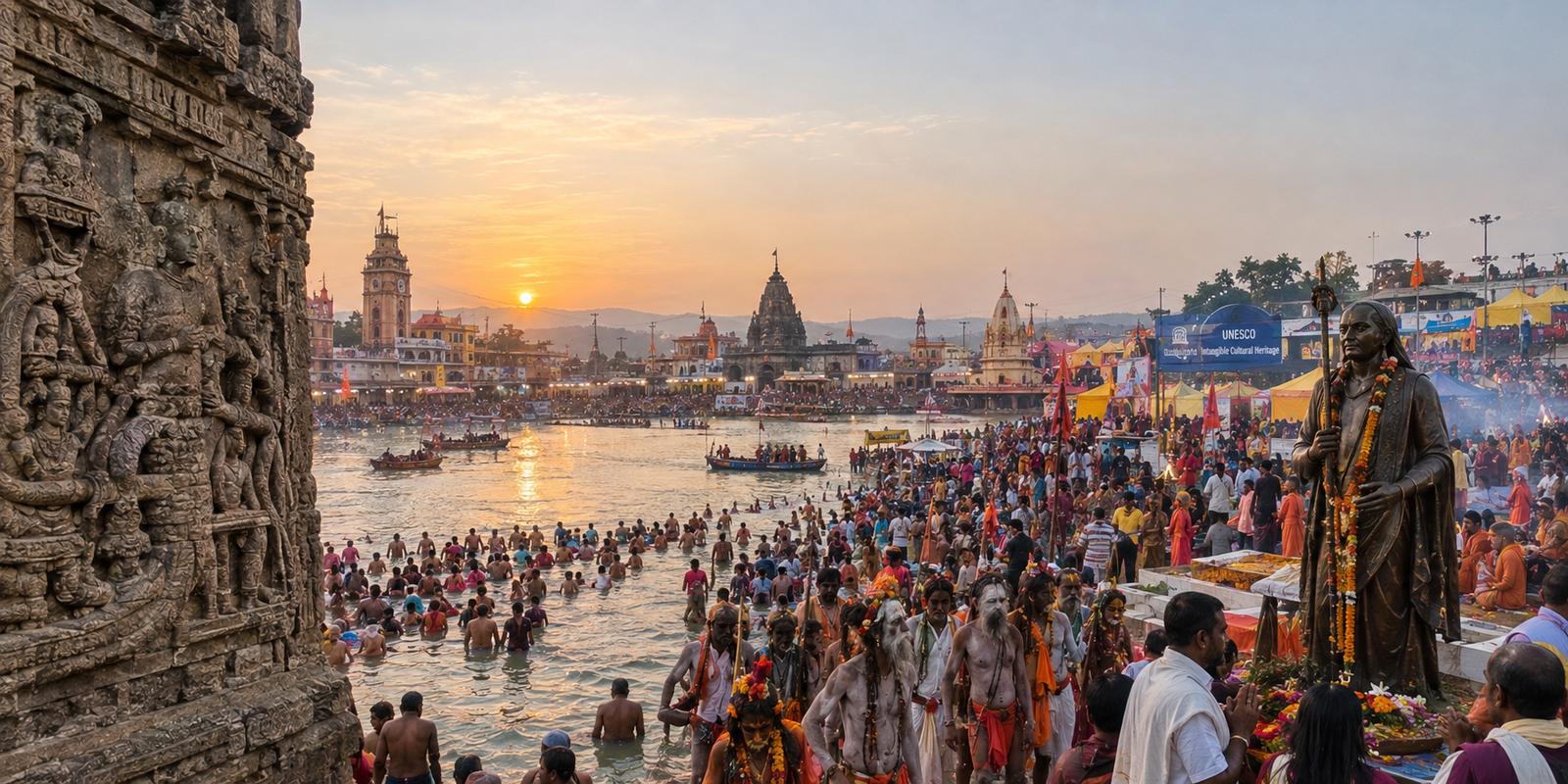

Why Kumbh Mela is Celebrated After 12 Years
Kumbh Mela is celebrated after 12 years because of two main reasons. First, Hindu mythology says that gods and demons fought for 12 divine days over the pot of nectar (Amrit), and these 12 divine days are equal to 12 human years. Second, the planet Jupiter takes about 12 years to complete one orbit around the Sun, and the festival is held when Jupiter, the Sun, and the Moon align in a special way.
The Mythological Reason: The Story of Samudra Manthan
The 12-year cycle of Kumbh Mela is deeply connected to the ancient tale of Samudra Manthan, or the churning of the cosmic ocean. According to Hindu mythology, the Devas (gods) and Asuras (demons) joined forces to churn the ocean in search of Amrit, the nectar of immortality. They used the Mandara mountain as the churning rod and the serpent Vasuki as the rope. This great event is described in several Hindu scriptures, including the Bhagavata Purana, the Mahabharata, and the Vishnu Purana.
During the churning, many wonderful things emerged from the ocean. These included the Kamadhenu (the wish-fulfilling cow), the Kalpavriksha (the wish-fulfilling tree), the Airavata (the white elephant), and Lakshmi (the goddess of wealth). Finally, Dhanvantari, the physician of the gods, emerged holding the Kumbh (pot) of Amrit.
As soon as the pot appeared, a fierce battle broke out between the gods and demons over who would possess it. During this celestial fight, a few drops of the precious Amrit fell on Earth at four sacred places:
-
Prayagraj
-
Haridwar
-
Ujjain
-
Nashik
These drops blessed the rivers at these locations with divine power, making them holy pilgrimage sites. The gods carried the pot of Amrit to heaven over 12 divine days. In Hindu cosmology, 12 divine days are equal to 12 human years. This is the primary mythological reason why the Kumbh Mela is held every 12 years.
The Concept of Divine Time in Hinduism
In Hindu tradition, time moves differently for gods and humans. One day of the gods is equal to one year of humans. Therefore, the 12 days that the gods fought over the Amrit are equal to 12 human years. This belief is the foundation of the 12-year Kumbh cycle. It is not just a story but a deep spiritual concept that connects human time with divine time.
The Astrological Reason: Jupiter’s 12-Year Orbit
Apart from mythology, the 12-year cycle of Kumbh Mela also has a strong astrological basis. In Vedic astrology, the planet Jupiter (Brihaspati) is considered the most significant planet. Jupiter takes approximately 12 years to complete one full orbit around the Sun. This is why the number 12 is so important in the Kumbh Mela tradition.
The Kumbh Mela is held when Jupiter, the Sun, and the Moon align in a specific configuration. This alignment is believed to amplify the sacred energy at the Kumbh Mela sites, making it an extremely auspicious time for ritual bathing and spiritual practices.
Different Kumbh Mela locations have different astrological conditions:
-
Haridwar: Kumbh Mela is held when Jupiter enters Aquarius (Kumbh) and the Sun enters Aries (Mesh).
-
Prayagraj: Kumbh Mela is held when Jupiter is in Aries and the Sun is in Capricorn.
-
Ujjain: Kumbh Mela is held when Jupiter is in Leo (Simha) and the Sun is in Aries.
-
Nashik: Kumbh Mela is held when Jupiter is in Leo and the Sun is in Leo.
These planetary combinations are calculated by astrologers, and they occur roughly every 12 years. This is why the Kumbh Mela is not held on a fixed date but is determined by the movement of the planets.
The Four Sacred Locations and Their Significance
The Kumbh Mela is not held at just one place. It rotates between four sacred cities across India. The full 12-year cycle completes when the festival has been held at all four locations. Each location has its own history and spiritual importance.
Prayagraj is located at the confluence of the Ganga, Yamuna, and the invisible Saraswati river. It is known as the “King of Pilgrimages” (Tirthraj). The invisible Saraswati river is believed to meet here.
Haridwar is situated on the banks of the Ganga. It is known as the gateway to the gods. The Ganga enters the plains here.
Ujjain is located on the banks of the Shipra river. It is home to the Mahakaleshwar Jyotirlinga. It is also a major center of ancient learning.
Nashik is situated on the banks of the Godavari river. It is known as the “Kumbh city” on the banks of the Godavari.
Because the Mela rotates between four cities over 12 years, a Kumbh Mela is held at one of these locations roughly every 3 years. This rotation allows millions of pilgrims to participate in this sacred event without traveling to the same place every time.
Types of Kumbh Mela: Ardh, Purna, and Maha Kumbh
The 12-year cycle is not the only cycle. There are different types of Kumbh Mela based on their frequency:
-
Ardh Kumbh Mela: Held every 6 years in Haridwar and Prayagraj. “Ardh” means “half,” so it falls halfway between two Purna Kumbh Melas.
-
Purna Kumbh Mela: Held every 12 years, rotating between the four sacred cities. This is the main Kumbh Mela that most people refer to.
-
Maha Kumbh Mela: The grandest of all, held only in Prayagraj every 144 years (after 12 Purna Kumbh Melas). It is the most auspicious and attracts the largest number of pilgrims.
The Maha Kumbh Mela is especially significant because it happens only once in a lifetime for most people. The last Maha Kumbh was held in 2013, and the next one will be in 2157. However, the 2025 Kumbh Mela in Prayagraj is being celebrated as a Purna Kumbh, which is also a very important event.
Historical and Cultural Significance
The Kumbh Mela is not just a religious festival. It is a major cultural and historical event that has been celebrated for centuries. The Chinese traveler Hiuen Tsang (Xuanzang) visited India in the 7th century and wrote about a great gathering at Prayagraj. This shows that the Kumbh Mela has been a part of Indian tradition for more than a thousand years.
Adi Shankaracharya, the great philosopher and reformer, is traditionally credited with organizing the Kumbh Mela for monastic orders. He established the Akharas (monastic orders of sadhus) and set rules for their participation in the Kumbh Mela. This helped the festival become a major event for spiritual learning and discussion.
In 2017, UNESCO recognized the Kumbh Mela as an Intangible Cultural Heritage of Humanity. It is also known as the largest peaceful gathering of people in the world. During the Kumbh Mela, millions of pilgrims, sadhus, and tourists come together to take a holy dip in the sacred rivers.
The Shahi Snan and Akharas
One of the most important rituals of the Kumbh Mela is the Shahi Snan (royal bath). This is a special bathing ceremony performed by the Akharas. The Akharas are monastic orders of sadhus, and they have a specific order of bathing that is decided by tradition. The Shahi Snan is considered the most auspicious time to take a dip in the holy rivers.
The Akharas also play a major role in the spiritual and cultural life of the Kumbh Mela. They organize religious discourses, rituals, and community meals. The presence of thousands of sadhus from different traditions makes the Kumbh Mela a unique spiritual experience.
Why the 12-Year Wait Matters
The 12-year gap is not just a tradition. It gives the festival its unique spiritual power. The combination of mythological significance and astrological alignment makes the Kumbh Mela an event of immense religious importance. Devotees believe that taking a holy dip in the sacred rivers during this time cleanses sins and helps attain moksha (liberation).
The 12-year wait also builds anticipation and devotion. Pilgrims plan their journey for years, and the event becomes a once-in-a-lifetime opportunity for many. The Kumbh Mela is a time for spiritual renewal, community bonding, and cultural celebration.
Kumbh Mela vs. Magh Mela
Many people confuse the Kumbh Mela with the Magh Mela. The Magh Mela is an annual festival held in Prayagraj every year during the month of Magh (January-February). The Kumbh Mela, on the other hand, is held every 12 years and rotates between four cities. The Magh Mela is like a smaller version of the Kumbh Mela, but it does not have the same 12-year cycle.
Conclusion
The Kumbh Mela is celebrated after 12 years because of the 12 divine days of the Samudra Manthan and the 12-year orbit of Jupiter. These two reasons—one mythological and one astrological—combine to create the sacred 12-year cycle. The festival rotates between four holy cities, and its different forms (Ardh, Purna, and Maha Kumbh) follow their own timelines within this grand cycle.
The Kumbh Mela is more than just a festival. It is a living tradition that connects millions of people to their spiritual roots. It is a celebration of faith, devotion, and the timeless quest for immortality. Whether you are a believer or a curious traveler, the Kumbh Mela offers a glimpse into the soul of India.
Frequently Asked Questions (FAQs)
1. Why is Kumbh Mela celebrated every 12 years?
Kumbh Mela is celebrated every 12 years because of two main reasons. According to Hindu mythology, the gods and demons fought for 12 divine days over the pot of nectar, and 12 divine days equal 12 human years. Also, the planet Jupiter takes about 12 years to orbit the Sun, and the festival is held when Jupiter, Sun, and Moon align in a special way.
2. What is the difference between Kumbh Mela and Maha Kumbh Mela?
Kumbh Mela is held every 12 years at four rotating locations. Maha Kumbh Mela is the grandest form and is held only in Prayagraj every 144 years. It occurs after 12 Purna Kumbh Melas and is considered the most auspicious.
3. Where is Kumbh Mela held in India?
Kumbh Mela is held at four sacred cities in India: Prayagraj, Haridwar, Ujjain, and Nashik. Each city hosts the festival based on specific astrological alignments, and the event rotates among these locations over a 12-year cycle.
4. What is the significance of taking a holy dip during Kumbh Mela?
Devotees believe that taking a holy dip in the sacred rivers during Kumbh Mela cleanses sins and helps attain moksha (liberation). The astrological alignment during this time is believed to make the water especially holy and powerful.
5. Is Kumbh Mela held at the same place every 12 years?
No, Kumbh Mela is not held at the same place every 12 years. It rotates between four cities: Prayagraj, Haridwar, Ujjain, and Nashik. So a Kumbh Mela happens at one of these locations roughly every 3 years, and each location hosts the Purna Kumbh every 12 years.