

List of 13 Akharas in Nashik Kumbh Mela 2027
- Home
- List of 13 Akharas in Nashik Kumbh Mela 2027

List of 13 Akharas in Nashik Kumbh Mela 2027
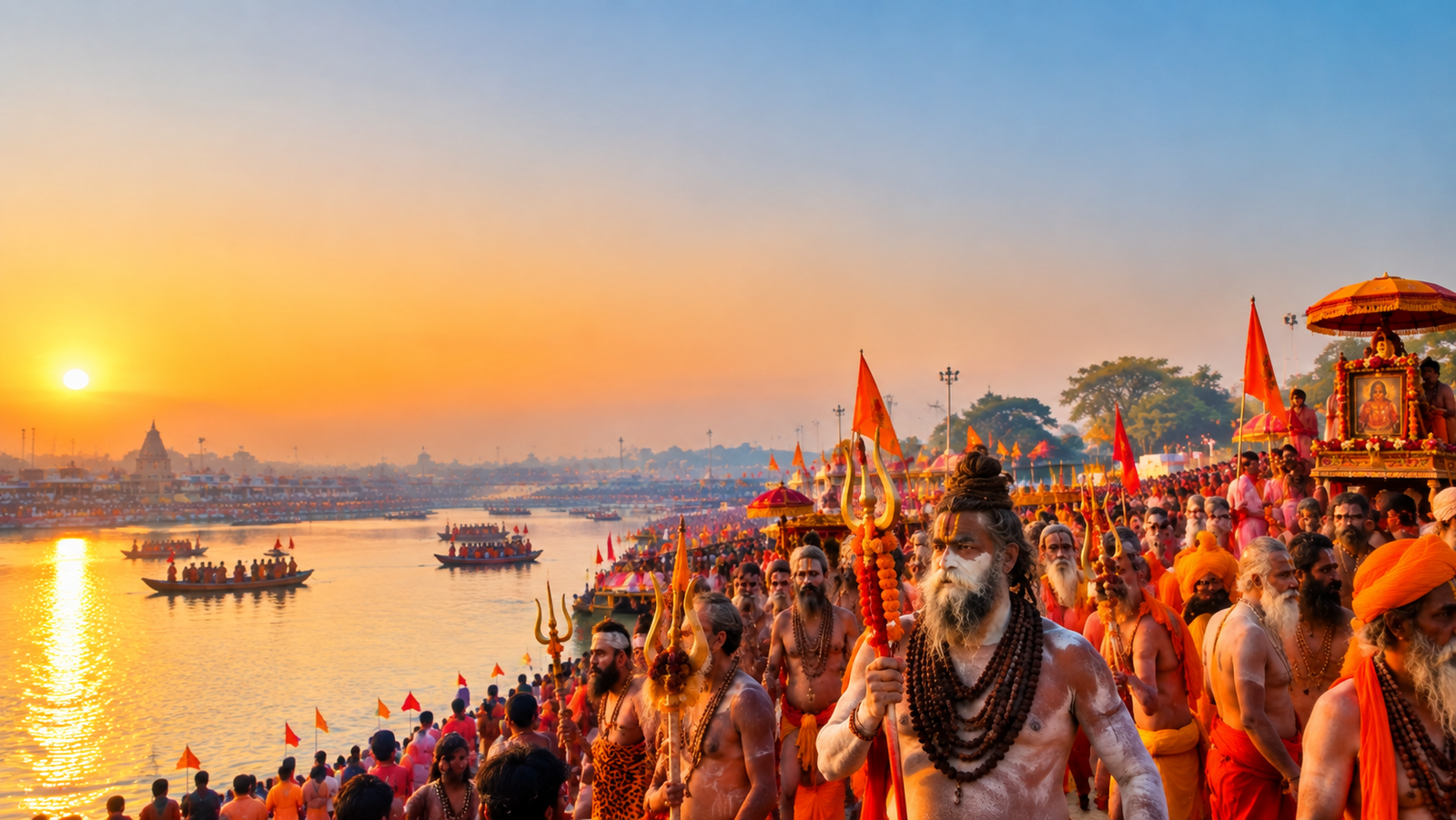
The Nashik Kumbh Mela is not just a congregation of millions of devotees; it is a grand spectacle of monastic power, tradition, and spirituality. The heart of this spectacle beats within the Akharas—the ancient warrior-monk orders of India.
During the Simhastha Kumbh in 2027, thousands of sadhus, including the fierce Naga Sadhus, will descend upon the Godavari banks. But they do not bathe together. A strict, centuries-old hierarchy dictates the Shahi Snan (royal bath) sequence.
If you are planning to witness the royal dip in 2027, you must know the list of 13 Akharas and exactly which sadhu bathes when. This guide provides the complete breakdown, ensuring you don’t miss the most electrifying moments of the Kumbh.
The Complete List of 13 Akharas in Nashik Kumbh Mela 2027
The Akharas are broadly divided into four main sects based on their philosophical leanings: Shaiva (worshippers of Shiva), Vaishnava (worshippers of Vishnu), Nirmala (scholar-warriors), and Udasi (followers of Guru Nanak’s son, Sri Chand).
To reach the total of 13 recognized orders for the Shahi Snan protocol, the sub-branches of Nirmala and Udasi are counted separately. Here is the official breakdown:
Category / Sect | List of 13 Akharas (Recognized Orders) |
Shaiva (Sannyasi) Akharas | 1. Mahanirvani Akhara |
Vaishnava (Vairagi) Akharas | 7. Nirvani Akhara |
Nirmala Akharas | 10. Nirmala Panchayati Akhara |
Udasi Akharas | 12. Bada Udasi Akhara |
Note for Pilgrims: While there are over 50 smaller sub-sects and regional akharas, only these 13 primary orders are granted the official right to participate in the grand Shahi Snan procession at the Nashik Simhastha.
The Shahi Snan Hierarchy – Which Sadhu Bathes When?
This is the most crucial question for every spectator. The bathing sequence is not decided by lottery; it is dictated by tradition, seniority, and military history. The Juna Akhara, being the largest and oldest, holds the supreme right of the “first dip.”
Here is the step-by-step royal protocol for the Nashik Kumbh 2027 Shahi Snan:
1. The First Dip (Avahan Snan) – Juna Akhara
- Who: The Juna Akhara (also called the Bhairav Akhara).
- Why: They are considered the “eldest” among the warrior monks. Their Naga Sadhus charge into the Godavari first, holding tridents and swords, clearing the spiritual path for others.
- What to expect: This is the most aggressive and visually stunning procession. Look for the Dandi Swamis (staff-holding monks) leading the charge.
2. The Second Wave – Mahanirvani & Niranjani Akharas
- Who: Mahanirvani and Niranjani Akharas bathe simultaneously.
- Why: These two share a close sisterly bond. Historically, they were formed together to balance the military power of the Juna Akhara.
- Viewing Tip: They enter the water immediately after Juna finishes, creating a massive wave of saffron and ash.
3. The Third Wave – Atal & Avahan Akharas
- Who: Atal Akhara and Avahan Akhara follow next.
- Significance: They wait patiently for the first three to finish. Their processions are known for elaborate palanquins carrying their Mahants (chiefs).
4. The Fourth Wave – Agni Akhara
- Who: The Agni Akhara (associated with the fire element).
- Ritual: They perform specific fire rituals (homas) on the banks before entering the water, making their bath a unique blend of fire and water worship.
5. The Vaishnava Procession – Nirvani, Digambar & Nirmohi
- Who: The three Vaishnava Akharas—Nirvani, Digambar, and Nirmohi.
- Why later: Since they worship Lord Vishnu (Rama/Krishna) rather than Shiva, they historically step back to let the Shaivas finish first. Their bath is quieter but deeply devotional, with chants of “Sita-Ram” echoing across the ghats.
6. The Final Act – Nirmala & Udasi Akharas
- Who: The Nirmala (Panchayati and Bada) and Udasi (Bada and Chhota) Akharas.
- The Last Dip: They bathe at the very end. Pilgrims who wait until the late afternoon can witness these scholarly ascetics, who are known for their philosophical discourses rather than physical warriors, take their holy dip.
Why Does This Bathing Order Matter in 2027?
Understanding this hierarchy is not just about curiosity; it is vital for safety and logistics during the Nashik Kumbh Mela 2027:
- Crowd Management: The administration releases barricaded routes based on this order. If you want to see the Juna Akhara, you must reach the ghats by 3:00 AM. If you want to see the Nirmalas, you can arrive in the afternoon.
- Spiritual Merit (Punya): Devotees believe that the water attains its maximum “Amrit” purity when the Juna Akhara steps in. Therefore, the first bath is considered the most auspicious for onlookers, even if they physically bathe later.
- Respect for Tradition: Interfering with this order historically caused massive fights between Akharas. Today, the administration strictly enforces this schedule to maintain peace.
What to Expect in Nashik Kumbh 2027 (Tentative Schedule)
While the exact calendar will be released by the Akhara Parishad in late 2026, the Shahi Snans generally occur on three specific dates:
- First Shahi Snan: Usually on the Somvati Amavasya (July 2027) – Featuring the Juna Akhara first.
- Second Shahi Snan: On the Purnima (Full Moon – August 2027).
- Third Shahi Snan: On the final Amavasya (September 2027).
Pro Tip: The first Shahi Snan is the most chaotic but offers the best view of the Naga Sadhus running naked into the river. The second and third are more organized and easier for families to watch.
Frequently Asked Questions(FAQs)
Q1: Which is the most powerful Akhara in Nashik Kumbh?
The Juna Akhara is widely considered the most powerful and senior, earning the right to bathe first during the Shahi Snan.
Q2: Can women visit the Akhara processions?
Yes, women can absolutely visit and watch the processions from designated viewing galleries. However, they are strictly prohibited from entering the inner sanctums of the Akhara camps where the Naga Sadhus reside.
Q3: How do the Akharas decide the bathing order?
The order is decided by an ancient council called the Akhara Parishad. It is based on the date of the Akhara's establishment, with the oldest getting precedence.
Q4: Are there more than 13 Akharas at the Kumbh?
Yes, there are many smaller sub-sects and regional Akharas present. However, only these 13 primary orders are recognized for the official, government-protected Shahi Snan processions.
Q5: Why do Naga Sadhus of Juna Akhara run into the river?
They run to recreate the energetic rush of the Devas protecting the Amrit pot during the Samudra Manthan. It is a display of fearlessness and divine frenzy.