

Bathing Dates Kumbh Mela 2027
Ellora Caves, Aurangabad
The Masterpiece of Ancient Indian Rock-Cut Architecture
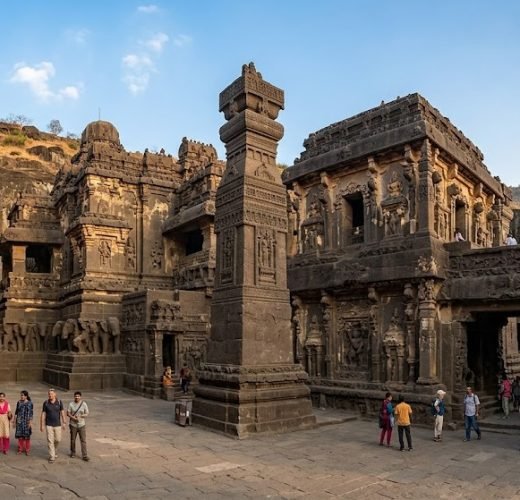
Ellora Caves – History & Architecture Guide
The Ellora Caves, located approximately 25 kilometers from Aurangabad in Maharashtra, represent one of the most remarkable archaeological complexes in the world. Extending over more than 2 kilometers, these 34 monasteries and temples were dug side by side into the wall of a high basalt cliff, showcasing an extraordinary feat of rock-cut architecture. The site brings the civilization of ancient India to life through its uninterrupted sequence of monuments dating from AD 600 to 1000. What makes Ellora truly exceptional is not just its unique artistic creation and technological brilliance, but its rare illustration of religious tolerance—with sanctuaries devoted to Buddhism, Hinduism, and Jainism coexisting harmoniously, reflecting the inclusive spirit that characterized ancient India.
The Kailasa Temple (Cave 16) – Crown Jewel of Ellora
Among the 34 caves, Cave 16 stands out as the undisputed masterpiece of Ellora. Known as the Kailasa Temple, this extraordinary structure is dedicated to Lord Shiva and represents one of the largest monolithic rock-cut temples in the world. Unlike other caves that were carved horizontally into the cliff face, the Kailasa Temple was excavated from the top downwards, involving the removal of an estimated 200,000 tons of rock. The temple complex features a magnificent central shrine, towering monolithic pillars, intricate carvings depicting scenes from Hindu mythology, and life-sized sculptures of deities and mythical figures. The architectural grandeur and sculptural finesse of the Kailasa Temple make it one of the most remarkable achievements of ancient Indian engineering and artistry.
The Buddhist Caves (Caves 1-12)
The earliest caves at Ellora, dating from approximately AD 600 to 800, belong to the Buddhist tradition. These caves primarily consist of Viharas (monasteries) and Chaityas (prayer halls), featuring simple yet elegant designs. Cave 10, known as the Vishvakarma Cave or the “Carpenter’s Cave,” is particularly notable for its chaitya hall with a beautiful stupa and intricate ribbed ceiling that mimics wooden architecture. The Buddhist caves reflect the austere monastic life and contain sculptures of Buddha, Bodhisattvas, and various Buddhist motifs.
The Hindu Caves (Caves 13-29)
The Hindu caves at Ellora, dating from approximately AD 600 to 900, represent the largest and most elaborate group among the three traditions. These caves are dedicated to various Hindu deities, with Lord Shiva being the primary focus. Apart from the magnificent Kailasa Temple (Cave 16), other notable Hindu caves include Cave 15 (Dashavatara Cave) with its impressive carvings depicting the ten avatars of Lord Vishnu, and Cave 29 (Dhumar Lena), which features a waterfall during the monsoon season—making it a unique attraction for visitors. The Hindu caves display intricate narrative panels, dynamic sculptures, and complex architectural layouts.
The Jain Caves (Caves 30-34)
The Jain caves at Ellora, dating from approximately AD 800 to 1000, represent the latest phase of construction. While smaller in number, these caves are known for their intricate carvings and refined artistic sensibilities. Caves 32, 33, and 34 are particularly noteworthy for their detailed sculptures, beautifully carved pillars, and colored paintings that have survived through the centuries. Cave 32, also known as the Indra Sabha, features a fascinating hall with remarkable acoustics where knocking on certain pillars produces the distinct sound of a tabla, showcasing the ancient understanding of sound and architecture. This cave also contains vibrant paintings and intricately carved pillars that captivate visitors.
Must-See Caves
Given the extensive walking required between and within the caves, comfortable footwear is essential for exploring Ellora. While all 34 caves offer unique attractions, the following are considered must-see destinations:
Cave 16 (Kailasa Temple): The monolithic masterpiece dedicated to Lord Shiva.
Cave 29 (Dhumar Lena): A spectacular cave with a waterfall during monsoon.
Cave 32 (Indra Sabha): Features colored paintings, echoing halls, and musical pillars.
Cave 33: Known for its exquisite Jain sculptures and carvings.
Cave 34: A smaller but equally refined Jain cave with detailed artwork.
Cave 10 (Vishvakarma Cave): A Buddhist chaitya with a stunning stupa and ribbed ceiling.
Location & Travel Information
The Ellora Caves are conveniently located approximately 25 kilometers from Aurangabad, with good approach roads leading to the site. On the way, visitors pass the historic Daulatabad Fort, offering an opportunity to combine multiple heritage destinations in one trip. From Aurangabad, visitors can also explore the nearby Ghrushneshwar Temple (one of the 12 Jyotirlingas dedicated to Lord Shiva), Bhadra Maruti Temple at Khuldabad, and the famous Daulatabad (Devgiri) Fort. Multiple travel choices are available, including taxis, buses, and organized tours.
Visitor Tips for Exploring Ellora
Comfortable Footwear: Essential, as extensive walking is required between caves and within the sprawling complex.
Flexible Exploration: Visitors can also travel by car and explore three to four caves at a time, making the experience more manageable.
Time Allocation: Plan to spend at least 4-6 hours to explore the major caves thoroughly.
Guided Tours: Hiring a local guide is highly recommended to understand the historical and architectural significance.
Best Time to Visit: October to March offers pleasant weather for exploration.
Hydration: Carry sufficient water, especially during warmer months.
Key Highlights at a Glance:
Location: Approximately 25 km from Aurangabad, Maharashtra.
Total Caves: 34 rock-cut caves.
Period: AD 600 to AD 1000.
Religious Traditions: Buddhism, Hinduism, Jainism.
Length: Extending over more than 2 kilometers.
Crown Jewel: Cave 16 – Kailasa Temple (largest monolithic rock-cut temple).
Buddhist Caves: Caves 1-12 (AD 600-800).
Hindu Caves: Caves 13-29 (AD 600-900).
Jain Caves: Caves 30-34 (AD 800-1000).
Special Attractions: Cave 32 (colored paintings, echo hall, musical pillars); Cave 29 (waterfall cave).
Nearby Attractions: Daulatabad Fort, Ghrushneshwar Temple, Bhadra Maruti Temple.
Best Time to Visit: October to March.