


Bathing Dates Kumbh Mela 2027
Shirdi Sai Baba Temple
Samadhi Mandir, History & Travel Tips
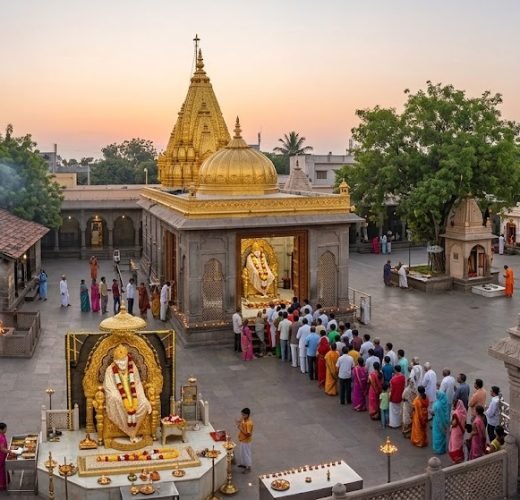
Shirdi (Sai Baba Mandir) – Pilgrimage Guide
Shirdi, a small village located in Kopargam Taluk, Ahmadnagar district, Maharashtra, stands as one of India’s most revered pilgrimage destinations. This sacred land is eternally associated with the revered sage Sai Baba, who lived here until his death and whose spiritual presence continues to draw millions of devotees from across the globe. Popularly known as the ‘Child of God,’ Sai Baba preached the profound messages of tolerance towards all religions and universal brotherhood, making Shirdi a symbol of interfaith harmony.
The Spiritual Journey
The entire pilgrimage experience at Shirdi revolves around the vast temple complex dedicated to Sai Baba. Devotees begin queuing up in the early hours of dawn, eager to catch a glimpse and seek the blessings of the life-size statue of Sai Baba housed within the sacred shrine. The atmosphere is charged with devotion and reverence as pilgrims from all walks of life gather to pay their respects. Thursday holds special significance at the temple, marked by elaborate pujas and special darshan of the Sai Baba statue, drawing even larger crowds of devotees.
The Samadhi Temple
The main temple, known as the Samadhi Temple, holds immense significance in the Sai Baba narrative. Its construction was initiated during Sai Baba’s lifetime with the original intention of building a temple dedicated to Sri Krishna. However, Sai Baba himself decided to reside there, and after he attained Nirvana (eternal peace), his mortal remains were buried at this very spot, transforming it into a revered samadhi. Today, devotees can also view a special room within the temple complex that exhibits the articles and valuables personally used by Sai Baba during his lifetime, offering a deeply personal connection to the saint.
Other Spiritual Attractions
Beyond the main temple complex, there are several other places of interest that devotees can visit to enrich their pilgrimage experience:
Dwarkamani Mosque: This is where Sai Baba meditated and slept on alternate nights. Near the mosque, in a corridor, burns the dhani—an eternal flame that continues to burn day and night, symbolizing Sai Baba’s eternal presence.
Gurusthan: The sacred spot where Sai Baba first appeared as a young boy and where he spent his early years.
Kandoba Temple: A temple dedicated to Lord Kandoba, reflecting Sai Baba’s respect for all faiths.
Shani Mandir: A temple dedicated to Lord Shani, where devotees offer prayers.
Narsimha Mandir: A temple dedicated to Lord Narsimha, an incarnation of Lord Vishnu.
Changdev Maharaj Samadhi: The resting place of Changdev Maharaj, a contemporary of Sai Baba.
Sakori Ashram: An ashram associated with Sai Baba’s devotee, providing a peaceful retreat for spiritual seekers.
Pilgrimage Travel Tips
After Sai Baba’s death, his fame spread far and wide, transforming Shirdi into a global spiritual hub. To make the most of your pilgrimage journey:
Best Time to Visit: October to March offers pleasant weather for temple visits and darshan.
Thursday Special: Plan your visit on a Thursday to witness special pujas and grand celebrations.
Darshan Timings: Arrive early morning to avoid long queues and experience the serene morning aarti.
Attire: Modest, traditional attire is recommended for visiting the temple.
Accommodation: Several dharamshalas, guesthouses, and hotels are available for devotees of all budgets.
Key Highlights at a Glance:
Location: Kopargam Taluk, Ahmadnagar district, Maharashtra.
Main Attraction: Samadhi Temple housing Sai Baba’s mortal remains and life-size statue.
Special Day: Thursday for special pujas and darshan.
Other Attractions: Dwarkamani Mosque, Gurusthan, Kandoba Temple, Shani Mandir, Narsimha Mandir, Changdev Maharaj Samadhi, Sakori Ashram.
Key Teachings: Tolerance towards all religions, universal brotherhood.
Eternal Flame: Dhani at Dwarkamani Mosque, burning continuously.
Exhibition: Room displaying Sai Baba’s personal articles and valuables.