

Bathing Dates Kumbh Mela 2027
Naroshankar Rameshwar Temple
A Sacred Shrine with Exquisite Black Stone Sculptures
Naroshankar Temple – Heritage Guide
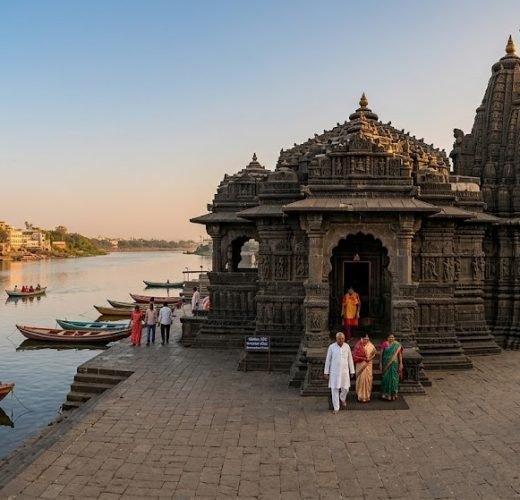
Situated in the historic Panchavati area on the banks of the sacred Godavari River—fondly referred to as Ganga by the locals of Nashik—the Naroshankar Temple stands as a magnificent testament to 18th-century architectural brilliance. Also known as the Rameshwar Temple, this heritage structure was built in 1747 by Naroshankar Rajebahaddur and remains one of the most exquisite pieces of architecture from that era.
Historical Significance
The temple’s historical roots trace back to 1747 when it was commissioned by Naroshankar Rajebahaddur, a notable figure of his time. The temple holds deep religious importance, with grand processions and celebrations (utsav) taking place here during major festivals like Ramnavami, Dasara, and Chaitra Padwa (the Hindu New Year). The temple’s construction using black stones gives it a distinctive and enduring character that has withstood the test of time. According to local beliefs, the temple is associated with the sacred legend of Sage Gautam, who performed rigorous penance at Brahmagiri Hill, and Lord Shiva’s blessing that brought the rivers Ganga, Gautami, and Godavari to earth.
Architectural Marvel
The architectural style of the Naroshankar Temple is known as “Maya,” reflecting the intricate craftsmanship and aesthetic sensibilities of the 18th century. The exterior of the temple is adorned with exquisite sculptures that rise above the present-day structure, showcasing the artistic mastery of the period. The black stone construction adds to the temple’s visual appeal and durability, making it a standout example of period architecture. The sculptural details on the outer walls depict various mythological and divine figures, offering visitors a glimpse into the rich artistic traditions of the time.
Religious & Spiritual Significance
The Naroshankar Temple is not just an architectural gem but also a site of profound spiritual significance. The temple is considered highly sacred, and it is believed that anyone who visits attains salvation. The location on the banks of the Godavari River adds to its sanctity, with the river itself considered as holy as the Ganges. The temple’s significance is further enhanced by its association with several sacred aspects:
The Godavari River originates in this region.
It is recognized as the place of Tri-Sandhya Gayatri.
It is believed to be the birthplace of Lord Ganesha.
It is the seat of the first Nath of the Nath Sampradaya, consisting of Gorakhnath and other saints.
It is the place where Guru Gahininath imparted holy knowledge to Nivrittinath.
It is where Nivrittinath preached and guided his brothers and sister towards self-realization.
It is regarded as the holiest site for performing the Shraddha ceremony.
Key Highlights at a Glance:
Location: Panchavati area, on the banks of the Godavari River, Nashik.
Built By: Naroshankar Rajebahaddur.
Year of Construction: 1747.
Alternate Name: Rameshwar Temple.
Architectural Style: Maya style.
Construction Material: Black stones.
Era: 18th century.
Key Feature: Exquisite exterior sculptures.
Festivals: Ramnavami, Dasara, Chaitra Padwa.
Spiritual Significance: Associated with salvation, Shraddha ceremony, and Nath Sampradaya.
Local Name for River: Ganga.